The mornings and nights are getting colder here and it has my imagination turning to autumn.
Hikes through misty trees. Fires in the wood stove. And, most importantly, soup!
Soup season is my most celebrated time of year. Hot soups filled with nourishing herbs is the most potent form of medicine in my opinion– there’s a reason grandmothers of yore always made chicken soup when their children were under the weather. It’s easy to think that herbalism means using fancy, exotic herbs, but it doesn’t have to be that way.
We all have amazing herbs in our kitchens that used to be commonly regarded as nourishing medicine. Just make soup and you’re using plant medicine.
Below are some kitchen herbs you probably have on hand right now, some of their medicinal properties, and a bit of folklore because that’s fun.
thyme is my personal favorite kitchen herb. Not only is it plain delicious in a fall soup, it also has strong antimicrobial, antiviral, and antifungal properties. It’s a warming herb, helpful for lung and sinus congestion and stimulating to the circulatory system. In old days, patches of thyme were said to be places to spot fairies. Culpepper, a famous 17th century herbalist, recommended thyme for nightmares.
rosemary has traditionally been regarded as a herb for longevity. As it encourages blood flow to the brain, it’s excellent for headaches, and also improves memory and concentration. It has been mentioned in materia medicas since first century AD and was worn in the hair of Greek scholars while studying in hopes it would sharpen their memories. In french hospitals it was once burned with juniper berry to improve air quality and prevent infection.
sage is excellent for sore throats and stomach aches. Like rosemary, it also improves cognitive function and memory, increasing capacity to handle stress. With an affinity to reduce excess sweating, it’s helpful for menopausal night sweats and hot flashes. Used to be regarded as a panacea. A medieval proverb said ‘why should a man die while sage grows in his garden.’ In old days, it was regarded as a panacea herb, a protective herb, and was believed that eating it every day in May would grant immortality.
parsley contains more iron than spinach and very high in vitamins and minerals. A blood building herb, it is helpful for bringing on delayed menstruation. It’s good for stomach problems, improving digestion. It also helps with urinary tract infections, water retention, and lowers blood pressure.
oregano everyone has heard of oil of oregano for immune health, and for good reason, as it’s an incredibly strong antibacterial and antifungal. It’s wonderful for chest infections or complaints like bronchitis and asthma. Records exist of its medicinal use since 3000 BC.
ginger is of course a classic remedy for nausea and vomiting. It strengthens weak digestion and is good for flus, as it clears congestion and encourages sweating to get over a fever. Its warming actions are also great for arthritis if used topically.
fennel– whenever I’m really bloated I make a strong tea with peppermint and fennel, and if I’m nauseous I do the same and add fresh ginger. Works like a charm every time. Fennel and ginger in broth is also delicious and supportive for stomach upset. Fennel has a sweet taste which makes it a great remedy for children. In old days, it was said that putting fennel in keyholes would protect houses from ghosts. In greek mythology, Prometheus hid an ember of the gods in a stalk of fennel to gift fire to humans.
Another way to glean the benefits of kitchen herbs is to make fire cider.
While the name was coined by herbalist Rosemary Gladstar in the 70s, herbal vinegars like it have been used for thousands of years to maintain good health.
Fire cider is spicy, invigorating, and immune boosting and it’s perfect to have on hand in the fall and winter to strengthen the immune system and nip colds in the bud.
There are many versions out there but here’s Rosemary Gladstar’s original recipe:
1⁄2 cup fresh ginger, grated
1⁄2 cup fresh horseradish, grated
1 chopped onion
10 cloves garlic, crushed or chopper
2 pepper, jalapeño, chopped
zest of one lemon
2 tablespoons rosemary, dried (or several sprigs of fresh rosemary)
1 tablespoon turmeric, ground
apple cider vinegar
1⁄4 cup honey (plus more to taste)
All you do is add everything to a half-gallon mason jar, cover with apple cider vinegar, and let sit in a cool dark place for 4-6 weeks, shaking every so often. Cover the jar opening with parchment paper before screwing on the lid to stop the metal from rusting.
When I make it I also add thyme and sometimes orange instead of lemon, or both, and instead of zesting I just put whole slices in. You could also add other herbs like fennel, elderberries, cloves, sage, or oregano. There are no real rules and it’s fun to experiment. Sometimes I can’t find every ingredient at the store (like horseradish root), so I just use what I can find or what I already have.
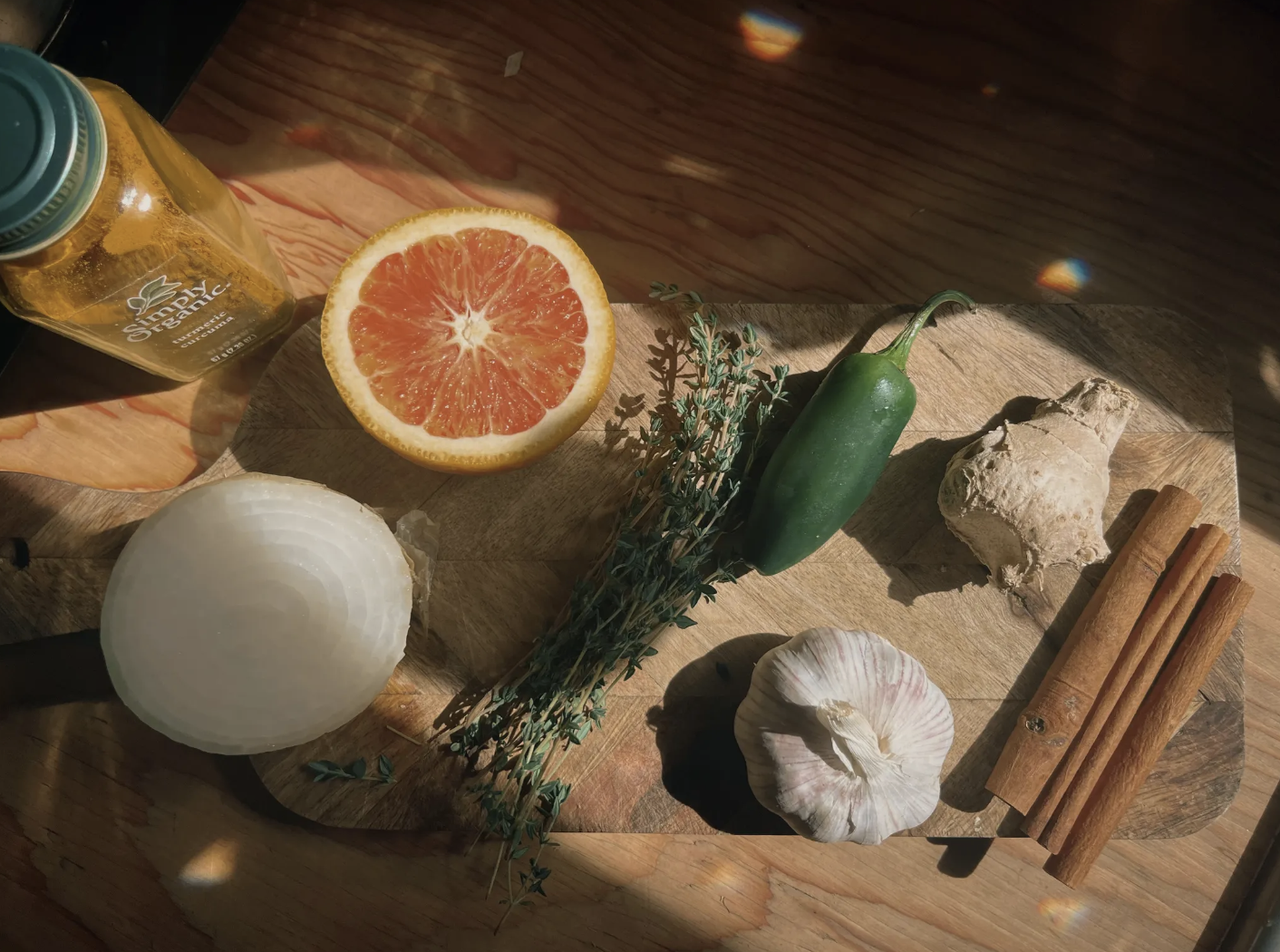
You can take it straight (if you’re brave), or dilute it in warm water to make tea, or add it to homemade salad dressings. Now is the perfect time to make it, so it will be ready by the time the cold months come around.
– Anna
Disclaimer: This information is for educational purposes only. Please consult with a qualified medical professional or healer before using any plant for medicinal purposes.*